
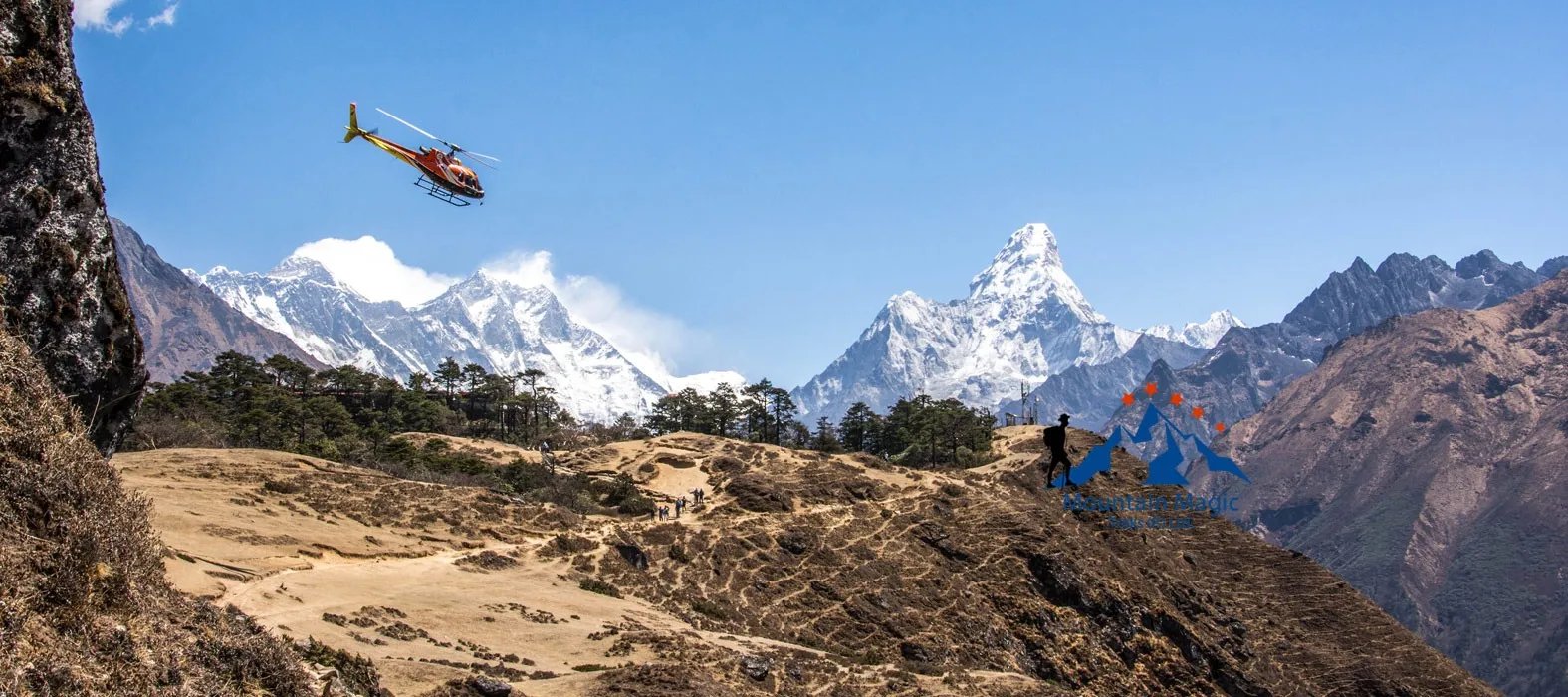
High mountains offer remarkable views, but they also create conditions where a small health problem or unexpected accident can become serious. Remote locations, difficult terrain, changing weather, and limited medical facilities make emergency planning an important part of Himalayan travel.
In the Everest region, rescue operations may involve trekking guides, local health workers, helicopter operators, hospitals, and insurance providers. Each group has a different responsibility, and successful coordination depends on clear communication and suitable conditions.
The Everest Base Camp Trek with Helicopter Return includes travel through remote settlements where access to advanced medical care may be limited. Understanding how rescue operations work helps travelers make better decisions before beginning their journey.
Why Emergency Rescue Is Challenging in the Everest Region
Rescue work in the mountains is different from emergency response in a city. Roads may not reach the affected location, and some areas can only be accessed on foot or by aircraft.
Several factors can make an emergency difficult to manage:
-
Remote locations: Medical facilities may be several hours away.
-
High elevation: Health problems can become more serious at altitude.
-
Rough terrain: Moving an injured person may require trained assistance.
-
Weather conditions: Clouds, wind, snow, and poor visibility can affect aircraft operations.
-
Limited communication: Mobile and internet coverage may not be available everywhere.
These conditions mean that evacuation decisions require careful judgment rather than automatic helicopter deployment.
The First Response When Someone Needs Help
The first stage of a mountain emergency is to understand what has happened and provide appropriate immediate assistance.
A trekking guide or nearby trained person may help assess the situation, protect the affected traveler, and contact the necessary support services.
Checking the Traveler’s Condition
The initial assessment may include checking breathing, consciousness, visible injuries, and other symptoms.
If altitude-related illness is suspected, the guide or medical professional may ask about headaches, nausea, dizziness, unusual tiredness, and changes in behavior.
Serious symptoms require urgent medical attention. A traveler should never continue climbing simply because the group has a schedule to follow.
Contacting the Right Support Team
Once the situation is understood, the responsible people may contact a local health post, rescue coordinator, trekking company, or emergency service.
Clear information is important. The caller may need to provide the person’s location, symptoms, condition, and available access routes.
Accurate communication can help responders decide what kind of assistance is appropriate.
The Role of Local Health Facilities
Health facilities in the Everest region provide an important first point of support. Their services and equipment vary depending on the location.
Some settlements have health posts or medical centers where basic assessments and treatment may be available.
Medical Assessment Before Evacuation
Not every health problem requires a helicopter evacuation. A medical professional may first assess the traveler and decide whether local treatment, rest, descent, or transfer to a larger hospital is needed.
This decision depends on the person’s condition and the medical resources available.
When Higher-Level Treatment Is Needed
Some emergencies require equipment, specialists, or treatment that cannot be provided locally. In such cases, transfer to a better-equipped medical facility may be recommended.
The destination depends on the medical need, available transport, and operational conditions.
How Helicopter Rescue Operations Are Arranged
Helicopters can provide important support in remote mountain emergencies. They may transport a patient from an accessible landing area to a medical facility when conditions allow.
However, a helicopter cannot land at every location. Landing space, altitude, aircraft performance, visibility, wind, and safety requirements all influence the operation.
Information Needed for a Rescue Flight
Rescue coordinators and operators may need details such as:
-
The exact location of the affected traveler.
-
The person’s medical condition.
-
The nearest suitable landing area.
-
Current weather and visibility.
-
The number of people requiring transport.
-
The availability of an appropriate aircraft.
These details help determine whether an evacuation can be carried out safely.
Why Rescue Flights May Be Delayed
A rescue request does not guarantee an immediate flight. Mountain weather can change quickly, and pilots must follow aviation safety requirements.
Cloud cover, strong winds, snowfall, and poor visibility may prevent operations.
The Everest Base Camp Trek with Helicopter Return includes a planned helicopter journey, but that scheduled flight should not be confused with an emergency rescue service. Both depend on suitable operating conditions.
The Importance of Travel Insurance
Travel insurance is an important part of preparation for high-altitude trekking. Standard policies may not cover activities above certain elevations or helicopter evacuation.
Before departure, travelers should read the policy carefully instead of assuming that every emergency cost will be covered.
What Travelers Should Check
A suitable policy should clearly explain:
-
Coverage for trekking at the planned maximum elevation.
-
Emergency medical treatment.
-
Helicopter evacuation, if available under the policy.
-
Hospital transfer and related expenses.
-
Exclusions and medical conditions.
-
Required approval procedures during an emergency.
Travelers should also keep their policy details and emergency contact information easy to access.
Understanding Payment and Approval
Some insurance providers require approval before arranging non-immediate evacuation services. Others may have specific procedures for emergency claims.
The exact process varies by insurer and policy. Travelers should understand these requirements before beginning the trip.
Communication During an Emergency
Communication can become difficult when travelers move through isolated sections of the Khumbu region.
A guide may use a mobile phone, local network, radio, or another available communication method depending on the location and service coverage.
Travelers should not assume that their personal mobile network will work throughout the route.
The Everest Base Camp Trek with Helicopter Return passes through areas where communication access can vary. Sharing emergency contacts with the trekking company and keeping important information available offline can help reduce confusion.
How Trekking Groups Can Prepare for Unexpected Situations
Emergency preparation should begin before the first trekking day. Travelers and guides should understand the basic response plan and know who is responsible for contacting support services.
Useful preparation steps include:
-
Share medical information and emergency contacts with the trekking company.
-
Carry essential personal medication.
-
Understand the symptoms of altitude-related illness.
-
Follow the guide’s safety instructions.
-
Keep insurance details accessible.
-
Avoid continuing the trek when serious symptoms appear.
Good preparation cannot remove every risk, but it can make decision-making more organized when a problem occurs.
Why Responsible Decisions Matter More Than the Schedule
Some travelers focus heavily on reaching a particular destination or completing the route within a fixed number of days. This approach can become dangerous when health problems or difficult conditions appear.
A responsible guide may recommend stopping, descending, or changing the itinerary. These decisions should be taken seriously.
Reaching a destination is never more important than protecting someone’s health and safety.
Final Thoughts
Emergency rescue in the Everest region depends on coordination between local guides, medical facilities, rescue teams, aircraft operators, and insurance providers. Remote terrain and mountain weather can make operations complicated, so every situation requires individual assessment.
The Everest Base Camp Trek with Helicopter Return is an exciting mountain journey, but travelers should understand that planned helicopter transportation and emergency evacuation are separate services. Proper insurance, reliable support, clear communication, and responsible decisions are essential parts of a safer trekking plan.
Frequently Asked Questions
1. Are helicopter rescues always available in the Everest region?
No. Rescue flights depend on weather, visibility, aircraft availability, landing conditions, and aviation safety requirements.
2. Does a planned helicopter return include emergency evacuation?
No. A scheduled return flight and an emergency medical evacuation are different services with separate arrangements.
3. Do travelers need insurance for high-altitude trekking?
Travel insurance with suitable high-altitude trekking and evacuation coverage is strongly recommended. Travelers should check the policy’s elevation limits and exclusions.
4. What happens if a trekker becomes seriously ill?
The guide or support team may arrange an initial medical assessment, contact appropriate services, and consider treatment or evacuation based on the person’s condition.
5. Can bad weather delay a mountain rescue?
Yes. Poor visibility, strong winds, snowfall, and other unsafe conditions can delay or prevent helicopter operations.