
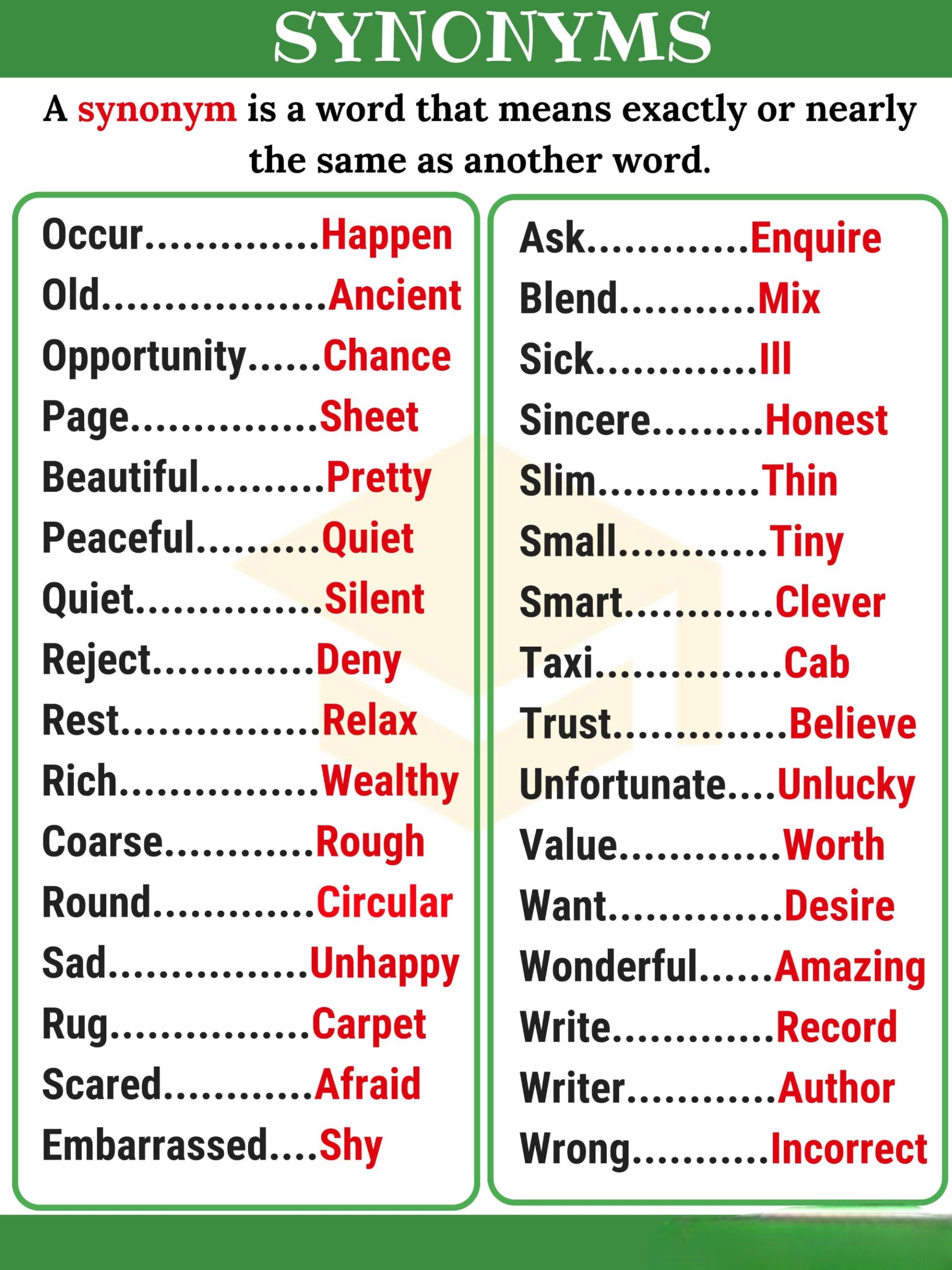
Common English Synonyms are essential tools for anyone looking to improve their vocabulary and communicate more effectively. Using synonyms allows you to express the same idea in multiple ways, making your writing and speaking more versatile and engaging.
Many students and professionals often rely on repetitive words, which can make communication monotonous. By incorporating Common English Synonyms, you can make your sentences lively and more precise, whether you are writing an essay, preparing for exams, or conversing in daily life.
Why Synonyms Matter in English
Synonyms enhance your understanding of the language and provide alternatives that suit different contexts. Knowing multiple words with similar meanings can help avoid redundancy, improve clarity, and create a more professional tone.
For instance, instead of repeatedly using the word “happy,” one can use joyful, delighted, cheerful, or content depending on the context. This demonstrates a deeper command of English and makes your communication more expressive.
Common English Synonyms for Daily Use
Mastering Common English Synonyms is particularly beneficial in academic writing, professional communication, and everyday conversations. Below are examples of frequently used words and their synonyms:
Good: excellent, outstanding, fine, commendable
Bad: poor, substandard, unsatisfactory, terrible
Big: large, huge, enormous, massive
Small: tiny, miniature, petite, little
Happy: cheerful, delighted, joyful, content
Sad: unhappy, sorrowful, downcast, miserable
Fast: quick, speedy, rapid, swift
Slow: unhurried, sluggish, leisurely, delayed
These synonyms can be naturally integrated into sentences to avoid repetition. For example: “She was delighted with her results” instead of “She was happy with her results.”
Using Synonyms to Improve Writing
Incorporating Common English Synonyms in your writing elevates your style. Academic essays, reports, and creative writing benefit from a varied vocabulary.
Instead of writing: “The movie was good,” you can say: “The movie was outstanding and engaging.” This not only avoids repetition but also adds depth and nuance to your expression.
Contextual Importance of Synonyms
Not all synonyms are interchangeable in every situation. Choosing the right synonym depends on tone, formality, and context. For instance, while “slim” and “skinny” both describe someone’s build, “slim” is generally more polite, whereas “skinny” can sometimes sound negative.
Common English Synonyms are most effective when you understand their subtle differences and apply them appropriately. This ensures that your communication remains accurate and culturally sensitive.
Real-Life Examples
Consider everyday scenarios:
-
At work: Instead of saying, “I need help,” you could say, “I require assistance.”
-
In school: Instead of writing, “The experiment was good,” you can write, “The experiment was successful.”
-
In conversation: “She is very kind” can become, “She is extremely compassionate.”
These examples illustrate how simple synonym usage can make your language richer and more precise.
Enhancing Vocabulary Through Synonyms
Regular practice of Common English Synonyms can significantly boost your vocabulary. Reading books, newspapers, and articles exposes you to different ways words are used.
Writing exercises, such as rewriting sentences using synonyms, help reinforce learning. For example, transforming: “The food was delicious” to “The cuisine was exquisite” provides a fresh perspective and enhances expressive ability.
Synonyms in Professional Communication
In emails, reports, and presentations, varying word choice is crucial. Using Common English Synonyms shows sophistication and attention to detail.
Instead of repeatedly saying “important,” alternate with “crucial, significant, vital,** or essential depending on the context. Similarly, “problem” can be replaced with “challenge, issue, concern,** or obstacle.
Avoiding Overuse and Misuse
While synonyms improve writing and speaking, overuse can confuse the reader or sound unnatural. Balance is key.
Common English Synonyms should be integrated naturally without disrupting flow. For instance, in casual conversations, simpler words often work better than overly complex alternatives. Understanding when to use synonyms is as important as knowing them.
Fun Ways to Learn Synonyms
Learning Common English Synonyms can be engaging through games, flashcards, and quizzes. Group activities in classrooms or online communities allow learners to test and expand their vocabulary.
Daily practice with sentences, conversations, and written exercises strengthens retention. For example, replacing words in a paragraph with their synonyms can be a practical exercise to internalize their usage.
Building Confidence with Synonyms
Using Common English Synonyms effectively boosts confidence in communication. You can articulate thoughts more precisely, avoid repetition, and express nuanced ideas.
Whether you are writing a formal letter, delivering a speech, or participating in debates, a rich vocabulary demonstrates proficiency and helps you convey your message more convincingly.
Applying Synonyms Across Platforms
Synonyms are not limited to writing; they enhance spoken English as well. Conversational fluency benefits from knowing multiple ways to say the same thing.
In social media posts, presentations, and public speaking, Common English Synonyms add variety and professionalism. Instead of saying “I am tired,” one could say “I am exhausted” or “I feel drained,” which communicates the emotion more effectively.
Read also: