
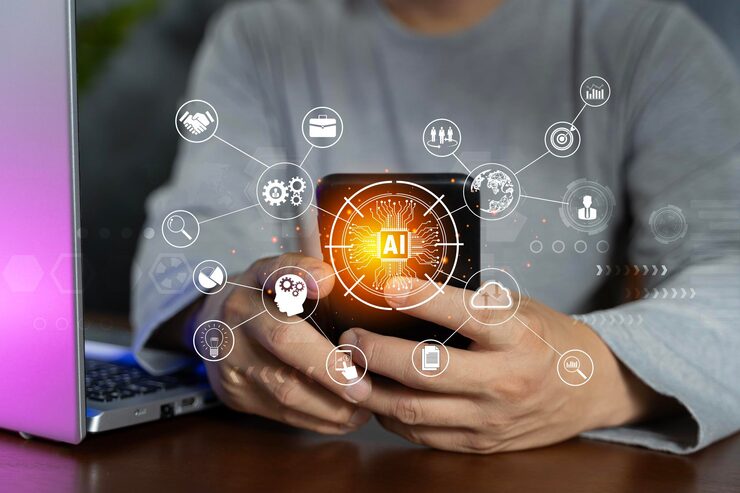
AI-powered applications are no longer futuristic ideas limited to research labs or tech giants. They are already part of daily life, quietly improving how people work, shop, communicate, and make decisions. From smartphones to healthcare systems, artificial intelligence now operates behind the scenes, learning from data and responding in real time.
A simple example can be seen when a phone camera adjusts lighting automatically or when a music app recommends the perfect playlist. These experiences feel natural because AI works silently, adapting to behavior. This seamless integration explains why businesses and consumers increasingly depend on intelligent software.
Understanding the Core of AI-powered Applications
AI-powered applications rely on machine learning, natural language processing, computer vision, and predictive analytics. These technologies allow systems to recognize patterns, understand language, and improve through experience. Unlike traditional software, AI evolves with usage rather than remaining static.
For instance, Google Assistant becomes more accurate as it understands speech patterns over time. Similarly, Apple Siri improves responses by analyzing user interactions. These systems demonstrate how intelligence grows with data, making applications smarter with continued use.
AI-powered Applications in Everyday Consumer Technology
Consumer technology showcases some of the most visible uses of artificial intelligence. Smartphones, smart speakers, and wearable devices now rely heavily on AI-driven features. Face recognition, voice commands, and health tracking all depend on intelligent algorithms.
Devices from Samsung, Apple, and Xiaomi integrate AI to optimize battery usage and enhance performance. These applications analyze usage habits to allocate resources efficiently. As a result, devices feel faster and more responsive without hardware changes.
AI-powered Applications in Healthcare Innovation
Healthcare has seen remarkable transformation through AI-based tools. Intelligent systems assist doctors in diagnosing diseases, analyzing medical images, and predicting patient outcomes. These applications support professionals rather than replacing them.
For example, IBM Watson Health helps analyze complex medical data to suggest treatment options. Radiology tools powered by AI detect anomalies in scans with impressive accuracy. These advancements reduce errors and improve patient care quality.
Business Growth Driven by AI-powered Applications
Businesses increasingly depend on AI to streamline operations and improve customer engagement. Intelligent chatbots, demand forecasting tools, and automated workflows reduce manual effort and improve efficiency. These applications enable faster decision-making.
Platforms like Salesforce Einstein use AI to analyze customer data and predict sales trends. This insight helps businesses personalize outreach and improve conversion rates. AI thus becomes a strategic asset rather than a technical feature.
AI-powered Applications in Finance and Banking
Financial institutions rely on AI to detect fraud, assess risk, and automate customer service. Algorithms monitor transaction patterns to identify suspicious activity instantly. This real-time analysis protects customers and institutions alike.
Companies such as PayPal and Mastercard use AI-driven systems to prevent fraudulent transactions. These tools learn continuously, adapting to new fraud techniques. Trust in digital finance grows as AI strengthens security frameworks.
Education Enhanced by AI-powered Applications
Education technology benefits significantly from artificial intelligence. Personalized learning platforms adapt content based on student progress and comprehension. This customization improves learning outcomes across different skill levels.
Platforms like Duolingo use AI to adjust lessons dynamically. The system identifies weak areas and revises content accordingly. Such applications make education more engaging and accessible for learners worldwide.
AI-powered Applications in E-commerce Experiences
Online shopping relies heavily on intelligent systems to recommend products and optimize pricing. AI analyzes browsing history, preferences, and purchase behavior to personalize user experiences. This approach increases satisfaction and sales.
Companies like Amazon use recommendation engines that predict what customers may want next. These systems influence purchasing decisions subtly and effectively. Personalized experiences now define modern e-commerce success.
Creative Industries and AI-powered Applications
Creativity and artificial intelligence increasingly intersect in content creation, design, and entertainment. AI tools assist in editing videos, composing music, and generating visual art. These applications enhance creative workflows rather than replacing artists.
For instance, Adobe Sensei integrates AI into design software to automate repetitive tasks. Creators spend more time on ideas while AI handles execution details. This collaboration expands creative possibilities.
AI-powered Applications in Transportation and Mobility
Transportation systems use AI to optimize routes, predict traffic, and improve safety. Ride-hailing platforms rely on intelligent algorithms to match drivers with passengers efficiently. Autonomous vehicle research also depends heavily on AI.
Companies like Tesla leverage AI for driver assistance features that improve road safety. These systems analyze surroundings continuously, reacting faster than humans in critical moments. Mobility evolves as intelligence integrates into vehicles.
Ethical Considerations Around AI-powered Applications
As AI adoption grows, ethical considerations become increasingly important. Issues like data privacy, algorithm bias, and transparency require careful attention. Responsible development ensures AI benefits society fairly.
Organizations now emphasize explainable AI to build trust. Users want to understand how decisions are made, especially in sensitive areas like healthcare and finance. Ethical frameworks guide sustainable AI innovation.
Trust and Authority in AI-powered Applications
Trust plays a crucial role in the acceptance of intelligent systems. Users must believe that applications handle data securely and make unbiased decisions. Companies that prioritize transparency earn long-term credibility.
Brands like Microsoft publish responsible AI guidelines to demonstrate accountability. This approach strengthens authority and reassures users. Trustworthiness becomes a competitive advantage in the AI ecosystem.
AI-powered Applications and Workforce Evolution
AI changes how people work rather than eliminating jobs entirely. Intelligent tools automate repetitive tasks, allowing employees to focus on strategic and creative responsibilities. Productivity improves as collaboration between humans and AI grows.
Tools such as Notion AI assist with documentation and planning. Employees save time while maintaining control over decisions. AI thus enhances human capabilities rather than replacing them.
AI-powered Applications in Marketing and Advertising
Marketing relies heavily on data-driven insights powered by AI. Intelligent systems analyze customer behavior to optimize campaigns and predict engagement. This precision improves return on investment.
Platforms like Meta Ads use AI to target audiences more effectively. Advertisers reach the right people at the right time. Marketing becomes more personalized and less intrusive.
AI-powered Applications in Smart Cities
Smart cities integrate AI to manage resources, improve public safety, and enhance urban living. Traffic management systems reduce congestion through predictive analysis. Energy grids optimize usage through real-time monitoring.
Cities adopting AI-driven solutions experience improved efficiency and sustainability. These applications demonstrate how intelligence can enhance large-scale infrastructure. Urban environments become more responsive to citizen needs.
Future Outlook of AI-powered Applications
The future promises deeper integration of AI into everyday life. Applications will become more intuitive, contextual, and proactive. Voice interfaces and predictive assistance will feel increasingly natural.
Advancements in generative AI will expand possibilities across industries. Businesses and consumers alike will rely more on intelligent systems. Continuous innovation will shape how society interacts with technology.
Experience and Expertise Behind AI-powered Applications
Behind every intelligent system lies years of research, data science expertise, and engineering excellence. Skilled professionals design algorithms, train models, and test outcomes rigorously. This expertise ensures reliability and performance.
Companies investing in talent and research maintain leadership in AI development. Expertise translates into better products and user experiences. Authority in AI stems from consistent innovation and proven results.
AI-powered Applications as a Long-term Technological Shift
Artificial intelligence represents a fundamental shift rather than a temporary trend. Applications powered by AI will continue evolving, influencing nearly every industry. This transformation reshapes expectations around software capabilities.
Understanding AI-powered applications helps users and businesses adapt confidently. Awareness enables informed decision-making and responsible adoption. Intelligence embedded in software defines the next era of digital progress.
Read also:
best smart watch in india
smart watch best brand
which smartwatch is best
best smart watch brand in india