
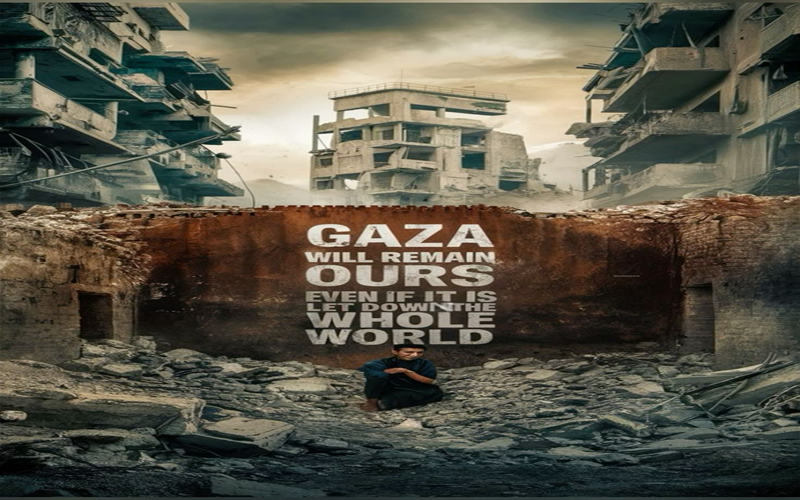
A Bold Move in British Television Raises Questions About Media Ethics, Editorial Courage, and the Politics of Broadcasting
Tonight, British viewers are set to witness a powerful and controversial broadcast as Channel 4 airs a new investigative documentary on Gaza, one that the BBC reportedly declined to show. Titled “Gaza: The Unseen War”, the documentary is already generating significant conversation and criticism for its graphic portrayal of the human toll of the conflict, its unflinching commentary on international complicity, and the media decisions surrounding its censorship.
Channel 4’s editorial choice has been lauded as a courageous act of public service journalism — but it also raises uncomfortable questions about how media gatekeeping works, especially in sensitive geopolitical matters like Israel-Palestine.
📺 What the Documentary Shows
Gaza: The Unseen War offers a raw, immersive look at the humanitarian catastrophe unfolding in the Gaza Strip, focusing particularly on civilian suffering during the 2023–2024 escalations. Shot by both international journalists and local Palestinian filmmakers, it includes:
-
Footage from bombed hospitals and schools
-
First-hand testimonies from survivors, aid workers, and journalists
-
Analysis of weapons used, infrastructure targeted, and humanitarian law violations
-
A data-driven breakdown of casualty demographics — including how many were children
Unlike most sanitized mainstream news segments, this documentary does not blur out the blood or cries. It aims to force viewers to confront the cost of conflict beyond political narratives.
“This is not just about Gaza. It’s about what we choose to see and what we’re told not to,” said the film’s lead director, British-Palestinian filmmaker Leila Nassar.
🧾 Why the BBC Rejected It
Sources within the BBC claim that the broadcaster passed on airing the documentary due to concerns over impartiality, balance, and graphic content. According to an internal memo reportedly seen by The Guardian, the documentary was deemed “emotionally charged” and lacked “editorial symmetry.”
Critics argue that this is a coded way of saying it was too critical of Israel, or that it portrayed Palestinian suffering without equal screen time devoted to Israeli perspectives or state justifications.
This editorial decision has sparked outrage among human rights groups, academics, and media watchdogs, who accuse the BBC of institutional cowardice.
“The BBC’s reluctance to show the Gaza documentary demonstrates how ‘balance’ can often mean silence,” tweeted Owen Jones, journalist and columnist for The Independent.
📡 Channel 4’s Contrasting Approach
Channel 4, long known for pushing the boundaries of investigative journalism and taking editorial risks, chose to broadcast the documentary in full, uncensored and during primetime, accompanied by:
-
A live panel discussion afterward, featuring journalists, academics, and aid workers
-
Viewer warnings about distressing content
-
Contextual framing by respected Channel 4 anchor Krishnan Guru-Murthy
This isn’t the first time Channel 4 has aired programming that other broadcasters avoided. From undercover footage in Myanmar and Xinjiang to challenging domestic political exposés, the network has a track record of airing uncomfortable truths.
“Our role is not to comfort the powerful but to inform the public,” said Dorothy Byrne, former Head of News and Current Affairs at Channel 4. “This documentary embodies that mission.”
🌍 International Reaction and Media Censorship
The broadcast decision has reverberated globally. Media rights group Reporters Without Borders (RSF) has praised Channel 4 for “preserving the journalistic principle of bearing witness.” Meanwhile, the Committee to Protect Journalists (CPJ) notes that Gaza remains one of the deadliest places in the world for reporters, making this kind of reporting both rare and vital.
However, in countries such as Germany, the U.S., and France, public broadcasters have also hesitated to air similar content, citing editorial policies, legal liabilities, or fear of backlash from pro-Israel lobbies and government pressure.
This has led to concerns about a coordinated soft-censorship environment, where controversial but fact-based content struggles to find a mainstream platform.
💣 Beyond Politics: A Human Story
Despite the geopolitical layers, the documentary ultimately focuses on human loss and resilience. It does not frame the story solely in terms of militant groups or state actors but highlights:
-
Children playing in rubble-strewn neighborhoods
-
Mothers searching for loved ones in collapsed buildings
-
Doctors performing surgeries in candlelight due to power outages
-
Teachers using makeshift materials to hold lessons in refugee camps
This bottom-up storytelling, rooted in daily life, gives the Gaza conflict a personal face that often gets lost in diplomatic discussions.
“I didn’t want to make a political documentary,” Nassar explains. “I wanted to make a human one.”
🗣 Viewer Reactions: Divided, But Engaged
Initial responses to the Channel 4 broadcast have been passionate and polarized. Social media platforms lit up within minutes of airing, with hashtags like #GazaUnseenWar, #Channel4Truth, and #WhyNotBBC trending across the UK.
✅ Supportive Voices:
-
“Channel 4 did what the BBC wouldn’t — let the truth be seen.”
-
“Everyone needs to watch this. No filters. Just reality.”
-
“This should be required viewing for policymakers.”
❌ Critical Responses:
-
“Too graphic for primetime.”
-
“No Israeli voices = bias.”
-
“Emotionally manipulative propaganda.”
Many neutral observers acknowledged the documentary’s emotional weight, even if they questioned some of the editorial choices.
🧠 Academic and Ethical Perspectives
Experts in media ethics and journalism argue that the Gaza documentary represents a critical moment in the evolution of public broadcasting. According to Dr. Meera Sharma, Professor of Global Journalism at SOAS University:
“There’s a false equivalence in requiring ‘both sides’ in every conflict story. Some stories are about power and suffering, not just who fired the first rocket.”
Others point to the duty of public service media to inform citizens — even when the information is disturbing. They argue that shielding the public from harsh realities under the guise of ‘balance’ undermines democracy and global justice.
🎥 The Power — and Risk — of Documentary
Documentaries like “Gaza: The Unseen War” aren’t just educational tools. They are cultural interventions that shape how nations see war, justice, and humanity.
By airing it, Channel 4 is making a statement that journalism must be bold, raw, and honest, even at the cost of discomfort. And in doing so, the network reaffirms its role in holding power to account, regardless of diplomatic consequences or political pressure.
But the risks are not just editorial. Channel 4 staff have already reported receiving online threats, and several prominent advertisers have reportedly paused campaigns citing “audience sensitivity.”
📜 Conclusion: A Moment of Reckoning for Public Broadcasting
The airing of Gaza: The Unseen War is more than just another documentary slot. It is a symbolic confrontation between truth-telling and media gatekeeping, between the public’s right to know and institutional fear of controversy.
It asks tough questions:
-
Who decides what suffering is worth showing?
-
Can neutrality exist in the face of mass civilian casualties?
-
And what is the purpose of journalism — comfort or clarity?
Channel 4 has chosen clarity. The BBC has chosen caution. And the audience, tonight, is left with a choice of its own — to look away or to look deeper.
Read More : uploadarticle
❓FAQs
Q1: Why did the BBC refuse to air the Gaza documentary?
The BBC reportedly cited concerns over impartiality and graphic content. Critics argue it was a political decision aimed at avoiding backlash.
Q2: What is different about the Channel 4 version?
Channel 4 is airing the documentary unedited, followed by a live panel discussion to offer context and diverse viewpoints.
Q3: Is the documentary biased?
While it centers on the Palestinian experience, filmmakers argue that it reflects factual, on-the-ground realities not often seen in mainstream broadcasts. Channel 4 has provided editorial framing and analysis to accompany the raw footage.
Read More: